


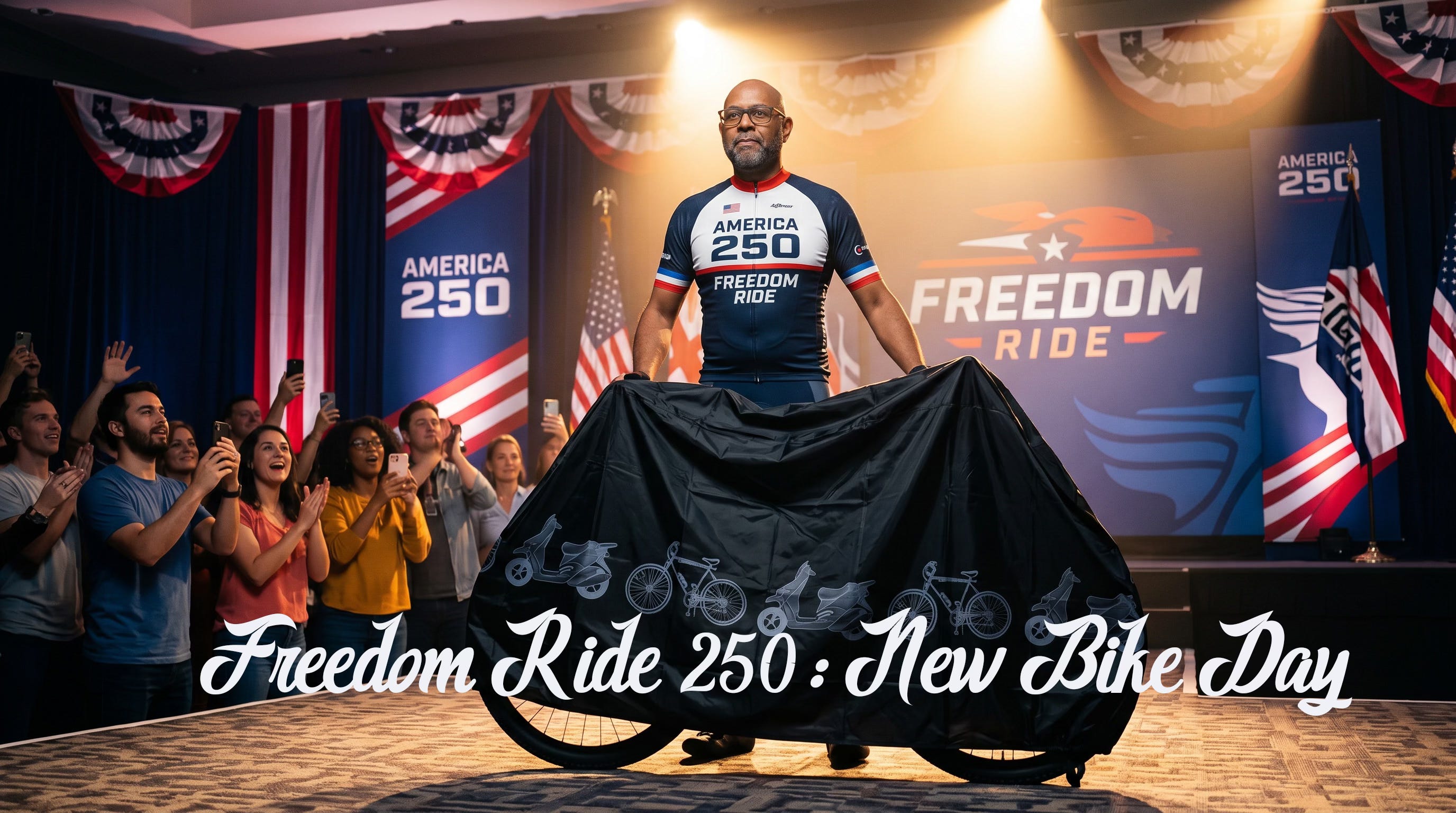
I had pretty much decided a while ago that for the Freedom Ride project, I was going to buy a new bike.
There were two main reasons for that.
First, I have the typical cyclist mentality. Cyclists do not really think in terms of replacing a bike. We think in terms of adding “another bike.” Is that a little wasteful in terms of resources? Maybe. But also, that is just how cyclists roll.
The second reason was more practical. For Freedom Ride, I knew I would be carrying more than the average bike tourer. This would not just be a simple ride with a few changes of clothes and a sleeping bag. I would be bringing camping gear, comfort items, media equipment, camera gear, chargers, batteries, and everything else needed to document the ride properly. That meant more weight.
And because of that extra weight, I decided early on that this project called for an e-bike.
So began the long, winding research process into which e-bike would make the most sense.
From the very beginning, my preference was for a bike with a belt drive. Belt drive systems are known for being low-maintenance. They do not need to be oiled or cleaned the way a traditional chain does, and that mattered to me. I knew portions of the early ride would involve mud, dirt, gravel, and less-than-perfect trail conditions. A belt drive seemed like the clean, simple, practical choice.
The problem is that belt-drive bikes are still harder to find in the United States. Belt-drive e-bikes are even harder to find. So, even though that was my preference, I had mostly written it off from the start.
Once I began looking seriously, the e-bike market seemed to fall into two broad categories.
E-bike Categories
The first category was commuter e-bikes. These are great bikes for zipping around town, going to work, running errands, or casual neighborhood riding. But most of them are not really designed for a long-distance tour with loaded bags and media equipment. Many of them have smaller, lighter batteries that might get you somewhere in the range of 30 to 40 miles, depending on conditions.
The second category leaned in the other direction. These were the big, heavy, high-powered e-bikes built around speed, throttle use, or both. Some of them had much larger batteries, often 700Wh or more, but they were also extremely heavy.
Neither category really fit what I wanted.
Yes, I wanted an e-bike to help offset the weight of the gear. But I did not want to turn Freedom Ride into a freshman version of a motorcycle tour. I still wanted to pedal. I still wanted the physical challenge. I still wanted the ride to feel like a bicycle journey.
And I definitely did not need a bike that could go 45 miles per hour.
With all due respect to the people who want that, you probably do not need that either. At that point, just buy a moped or a motorcycle.
In any case, that realization made the search easier because it narrowed down the options.
Then, just as I was beginning my search, Salsa Bikes released three new e-bike models.
Salsa Bikes
That caught my attention immediately. My current bike is a Salsa Journeyman, and I used that bike for my first rides along the C&O Canal and GAP Trail back in 2021. I love that bike. So when Salsa entered the e-bike market, I paid attention.
The Salsa Tributary looked like it might be the one. It was a beautiful bike, and it seemed to offer a good weight-to-power ratio in terms of battery capacity and touring potential.
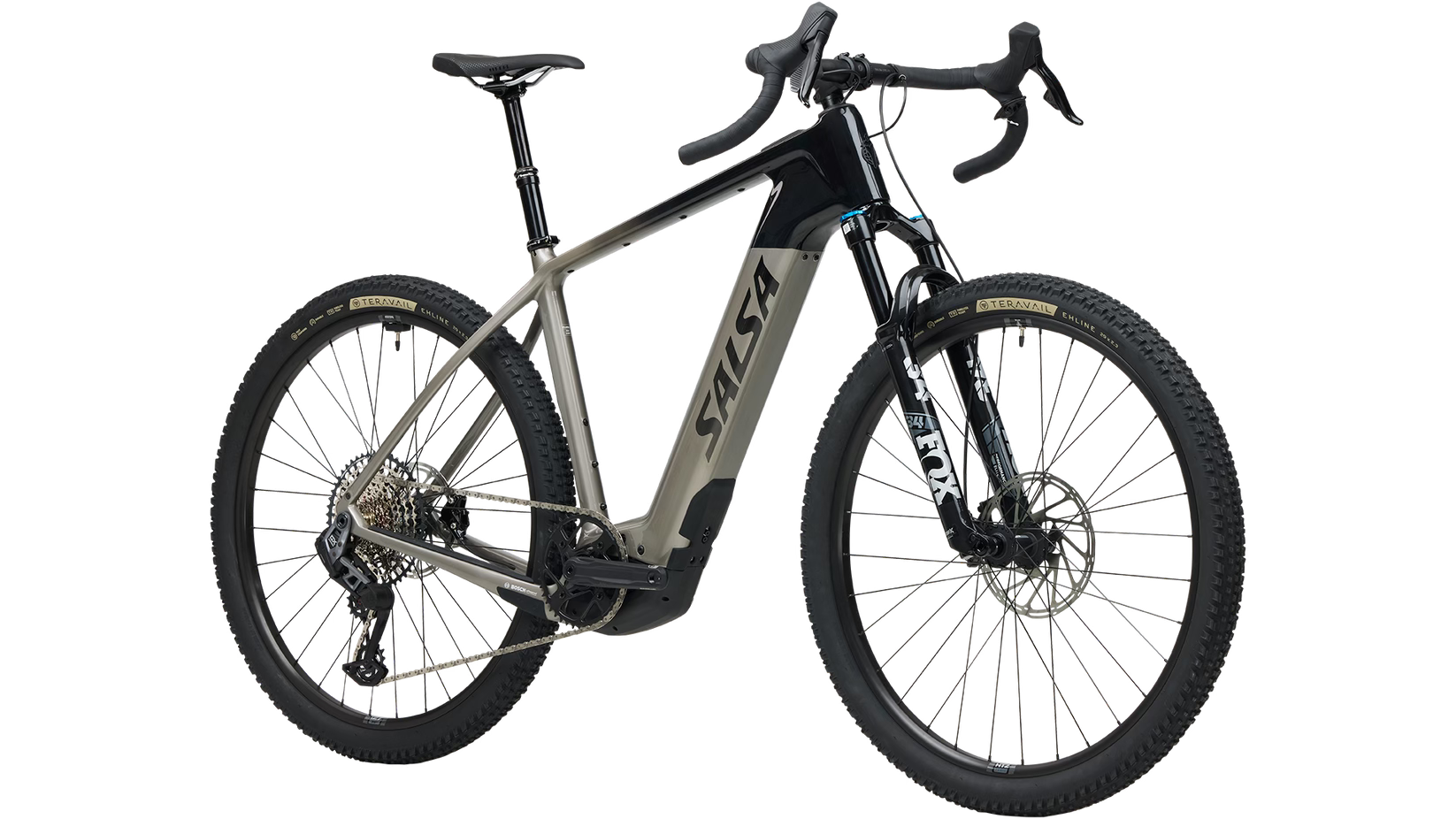
Other possibilities were brands like Trek, Aventon, and Specialized, but Salsa quickly moved near the top of my list.
My next step was to see whether any of these companies might be interested in sponsoring the bike for Freedom Ride.
I knew that was a long shot.
Freedom Ride is a worthy idea. I believe in it deeply. The project is about telling American stories, celebrating the country’s 250th anniversary, and documenting people and places across the route. But belief in a project and proof of a project are two different things.
That is the hard part when you are building something new.
You can see the vision clearly. You can feel the potential. You know the audience will come once the stories begin moving and the ride starts unfolding. But from the outside, companies are being asked to take a chance on something that does not yet have a track record.
No big follower count yet.
No long list of past sponsors.
No polished case studies showing what happened last year.
Just a strong concept, a lot of preparation, and the belief that the project can become something meaningful.
That is a difficult place to pitch from. Companies get requests all the time. Many of them naturally gravitate toward known personalities, professional gravel racers, large influencers, or existing categories that already fit their marketing plans. A new media project, no matter how heartfelt or well-planned, still asks them to take a risk.
Still, I reached out.
I contacted the companies through their online applications and by email, sent what I could, and then went back to working on other pre-production matters. At that point, the bike itself would not become urgent until later.
Then I woke up one morning to an email that changed everything.
Skyline
Priority Bicycles, an American company based out of New York, announced a new bike called the Skyline.
That got my attention immediately.
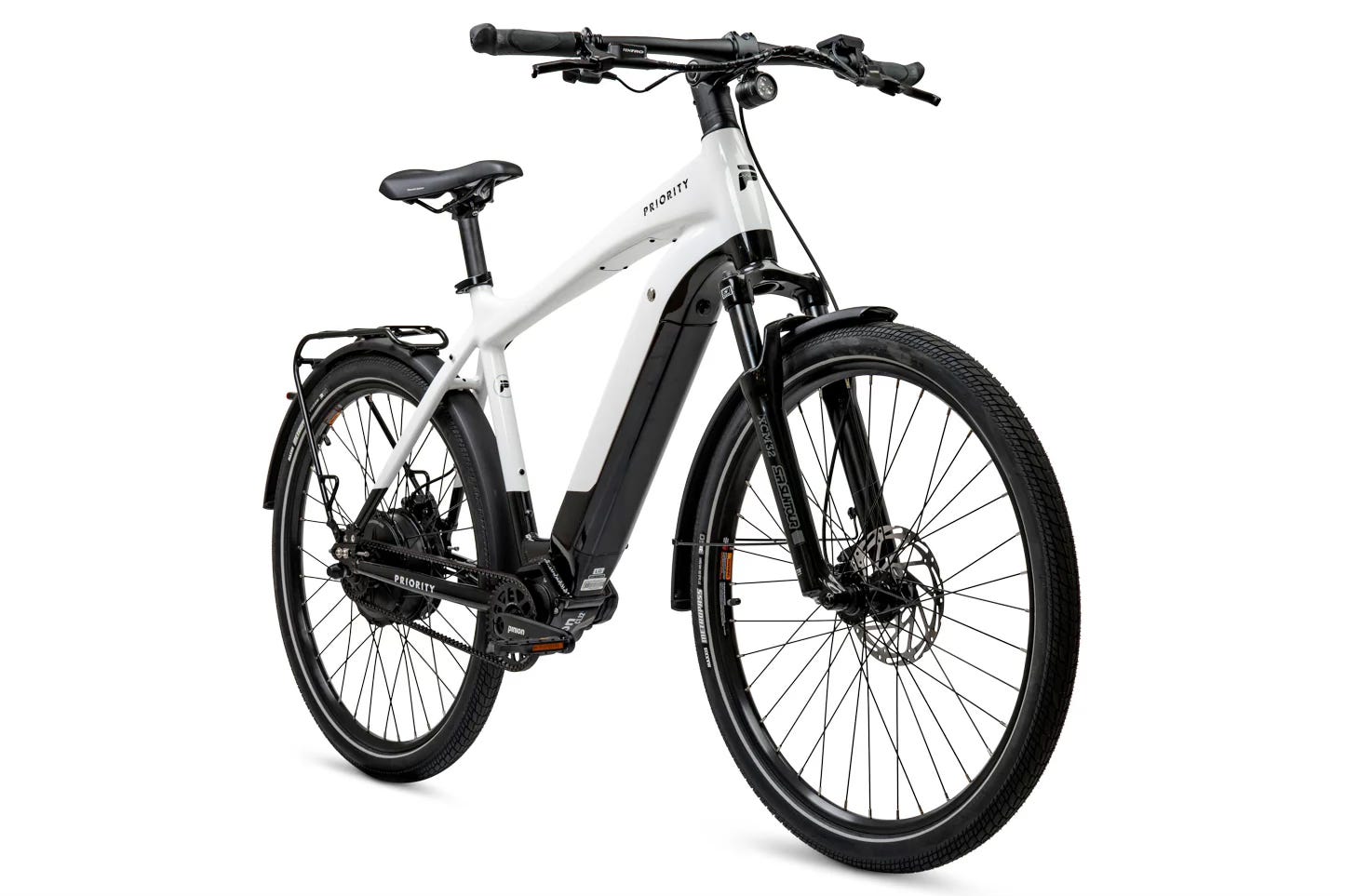
Priority is known for belt-drive bikes, and they have had a strong presence in the cycling world, including their ongoing sponsorship of Ryan Van Duzer. They already had an e-bike called the Current, but that model is more of a commuter bike and not really designed for touring.
The Skyline, however, looked different.
It was beautiful. Clean lines. Belt drive. A large battery without being oversized. It looked like the bike I had wanted from the very beginning.
That announcement completely shifted my focus.
I immediately went all in on the Skyline and contacted Priority about Freedom Ride. Over the next few weeks, I sent proposals, ideas, and detailed explanations of how I believed the project could add value to their brand and to the Skyline specifically.
At that point, I had moved the Salsa Tributary to the back burner.
I want to give Priority credit here. They gave me time. They listened. They allowed me the opportunity to make the pitch. I appreciated that. For a new project, that matters. Even being taken seriously is part of the climb.
Unfortunately, because Freedom Ride was still a new media project without an established track record, they could not take the risk of a full sponsorship. They did, however, offer a slightly higher discount if I wanted to use the Skyline.
That left me with a real decision.
E-bike pricing is already a sore point, and it became even more complicated as America moved into new tariff concerns. The Salsa Tributary retailed from around $4,500 to $7,999, depending on the frame material. The Priority Skyline launched at $3,499, but soon moved to $3,999 due to tariffs.
The Skyline was still more affordable than some of the other options, and I still had not heard back from Salsa about my sponsorship proposal.
Then my local bike shop changed the equation.
They had a bike that normally sold for $3,999 marked down to $2,499.
That left me with a real decision.
The Priority Skyline was the emotional choice. It was the bike I had wanted from the start: clean, belt-driven, elegant, and seemingly made for the vision I had in my head.
But then another option appeared.
Sometimes Local is Better
It was sitting at my local bike shop. It was not the original dream bike. It did not have the belt drive I had been hoping for. It was technically an older model, even though the bike itself was new.
But it checked a lot of the boxes that mattered.
It had a strong mid-drive motor, which is important when you are climbing hills with loaded bags. It had a large battery. It had proven components. It had racks and fenders already built into the setup. And perhaps most importantly, it was on sale for a price that made the decision much harder than I expected.
The Skyline still had my heart.
But this bike made a very strong argument to my head.
It became a battle between the bike I wanted emotionally and the bike that made the most sense practically. And when you are building a new project, trying to manage costs, and already learning how hard it is to secure sponsorship for an idea that has promise but no long track record yet, practical decisions matter.
I went back and forth on it.
A lot.
But in the end, I could not justify paying at least $1,500 more for the emotional choice when there was a more-than-capable bike available right in front of me.
So, after all the research, the sponsorship pitches, the proposals, the back-and-forth, and the second-guessing, Freedom Ride finally has its official bike.
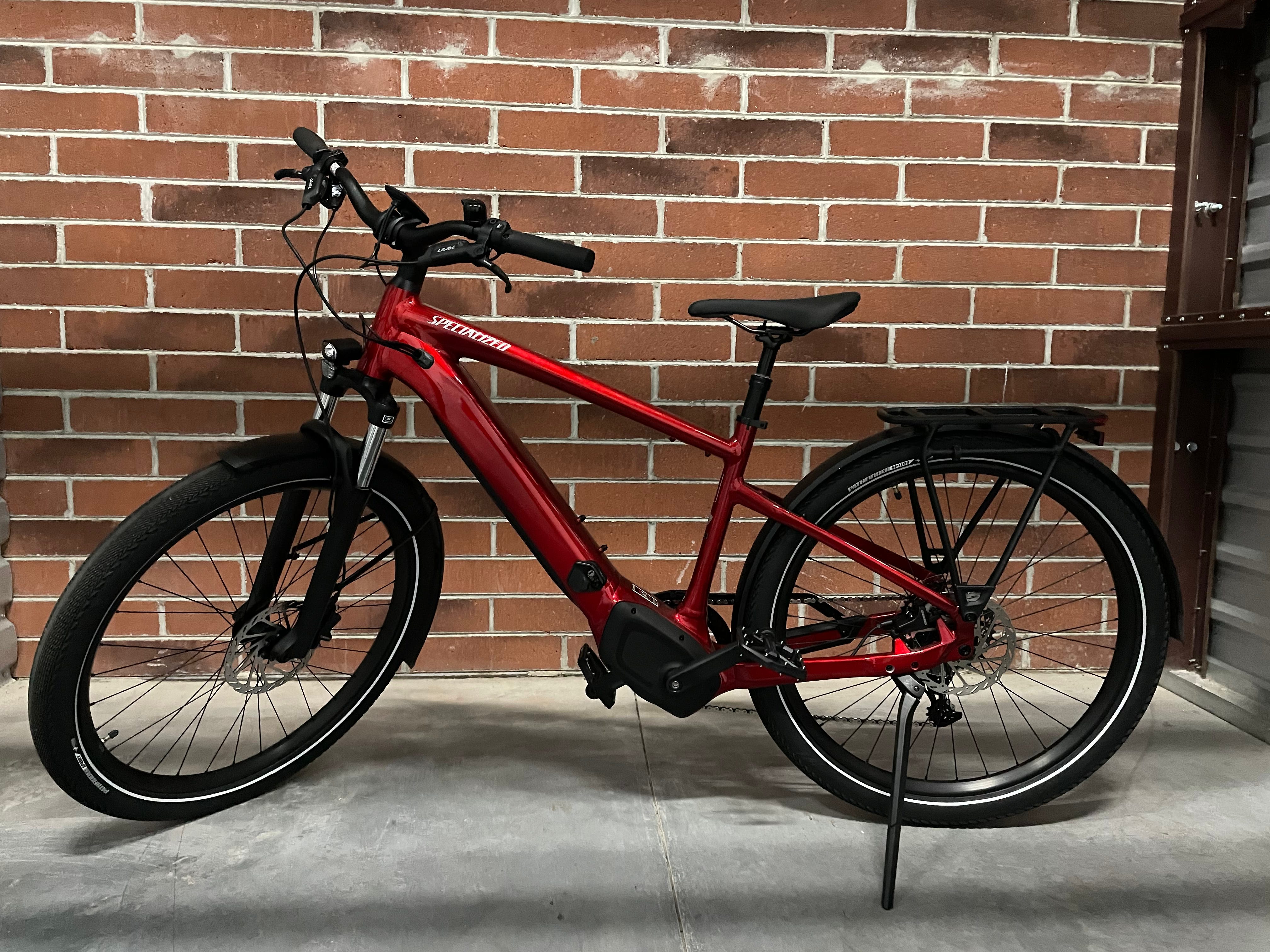
It is a red Specialized Turbo Vado 4.0.
Here are the primary specs:
Drive: Mid-drive, bottom bracket motor mount
Motor: Specialized 2.0, 70Nm torque, 250W nominal
Battery: Specialized U2-710, 710Wh integrated in the downtube
Weight: About 27 kg / 60 lb
Display and controls: MasterMind TCD with handlebar remote, built-in anti-theft feature, Bluetooth
Frame and fork: E5 aluminum frame; SR Suntour MobieA32 fork with 80mm travel
Brakes: SRAM Level hydraulic disc brakes with 180mm rotors
Drivetrain: SRAM NX 11-speed, 11–42T cassette
Gearing: 48T Praxis chainring
Wheels and tires: 650b disc wheels with Pathfinder Sport Reflect 2.3 tires
Rack, fenders, and capacity: MIK HD rack with 27 kg max load; Specialized Drytech fenders
In the end, I could not in good conscience choose the emotional option when the practical option was sitting in front of me at that price.
I still like Priority. I still think they are a good company. I hope there may be an opportunity to work with them in the future. But for this moment, and for this ride, Specialized was the decision I needed to make.
The only thing left to do was name the bike.
And every bike worth having deserves a name.
I toyed around with several possibilities, but ultimately landed on:
Lady Independence.
Indy for short.
So say hello, everyone, to Freedom Ride’s official ride.
Follow the Freedom Ride Tour here and on X and Youtube.