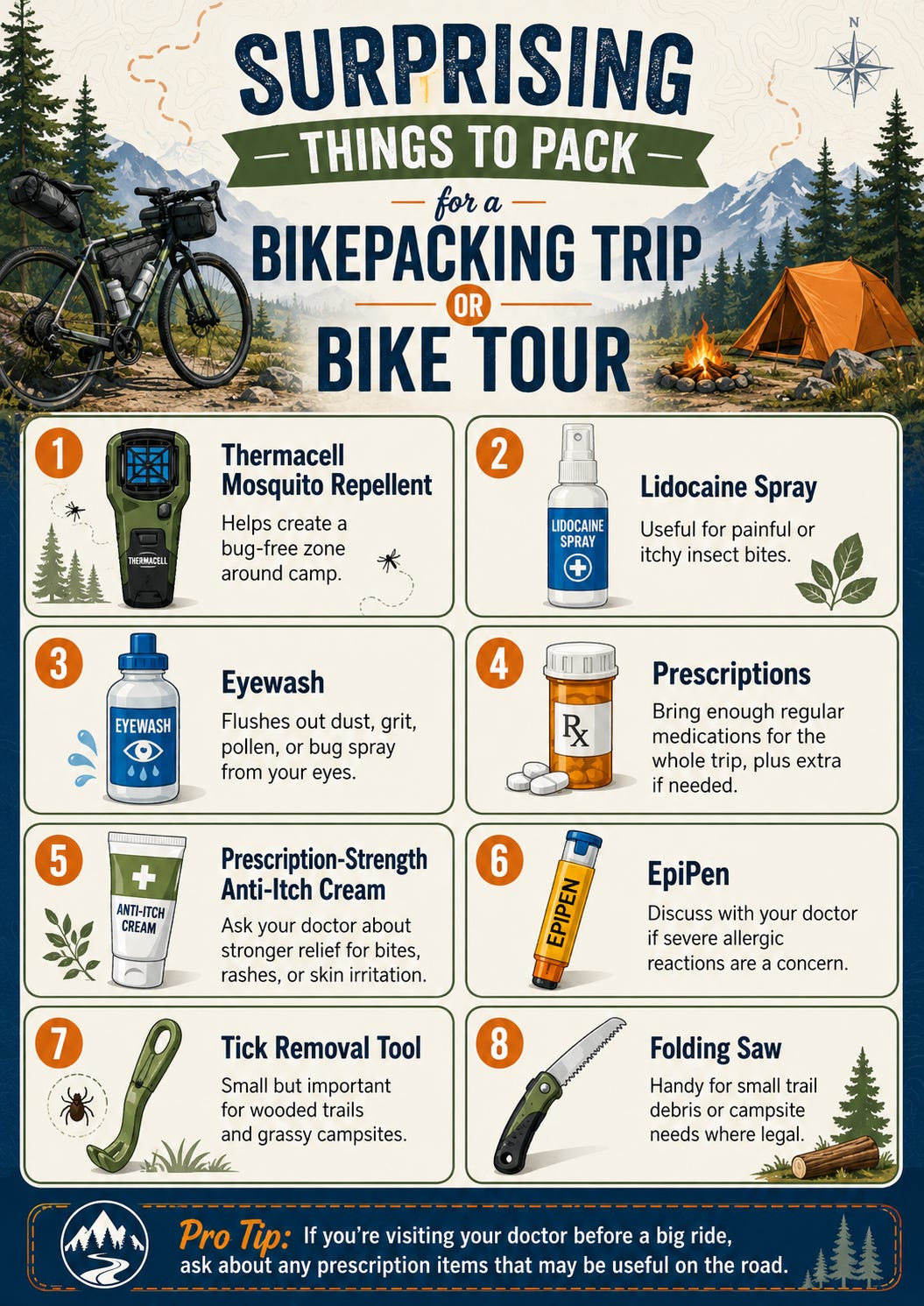
When people think about bikepacking gear, they usually think about the obvious stuff: tent, sleeping bag, water bottles, multi-tool, spare tubes, lights, and food. But once you’re actually out there — miles from a store, riding through woods, fields, rail trails, campgrounds, and small towns — it’s often the less obvious items that make the biggest difference.
Here are a few surprising things worth carrying on a bikepacking trip or long bike tour.
1. Thermacell Mosquito Repellent
Bug spray is useful, but a Thermacell-style mosquito repellent can be a game changer at camp.
After a long day of riding, the last thing you want is to sit outside your tent getting eaten alive by mosquitoes. This is especially true near rivers, marshes, lakes, wooded trails, and humid campsites. A small mosquito repellent device can create a more comfortable zone around your cooking area, picnic table, or tent entrance.
It may feel like a luxury item until the first night you’re trying to cook dinner in a cloud of mosquitoes. Then it feels essential.
2. Lidocaine Spray for Insect Bites
Insect bites are usually not serious, but they can be incredibly irritating, especially when you’re hot, sweaty, tired, and still have miles to ride.
A lidocaine spray or similar topical numbing spray can help take the edge off itchy or painful bites. It is not a cure, but it can make a rough night at camp much more tolerable.
This is one of those small items that weighs very little but can dramatically improve your comfort.
3. Prescription-Strength Anti-Itch Cream
Over-the-counter creams are fine for minor itching, but if you know you react badly to mosquito bites, chiggers, poison ivy, or other skin irritants, ask your doctor whether a prescription-strength anti-itch or anti-inflammatory cream makes sense for you.
On a bike tour, you may be passing through areas where you cannot easily get to your regular doctor or pharmacy. Getting this ahead of time can save you from being miserable for several days.
Do not wait until you are already covered in bites to wish you had packed something stronger.
4. Eyewash
Eyewash does not sound exciting until you need it.
On a bike tour, your eyes can get hit with dust, pollen, trail grit, sunscreen, bug spray, or campfire smoke. If you ride gravel trails, rail trails, or rural roads, something will eventually end up in your eyes.
A small bottle of sterile eyewash or saline rinse can help flush out irritation quickly. This is especially useful if you wear contact lenses or ride in dry, dusty conditions.
It is a small, cheap item that can prevent a minor irritation from ruining a day of riding.
5. Make Sure You Have Your Prescriptions
This one is not surprising because it is unusual. It is surprising because people forget it.
Before a bikepacking trip, make sure you have enough of any regular prescriptions to last the entire trip, plus extra in case of delays. Weather, mechanical problems, transportation issues, illness, or route changes can all keep you out longer than planned.
Also consider where you’ll be riding. If you’re crossing state lines or spending time in rural areas, refilling a prescription may not be simple.
Pack your medications in a waterproof bag and keep them somewhere easy to access.
6. Ask Your Doctor About an EpiPen
Most people do not expect to have a serious allergic reaction on a bike tour. But bees, wasps, hornets, fire ants, and other insects are real possibilities outdoors.
You may never need an EpiPen, and not everyone needs one. But if you have a history of allergic reactions, or if you’ll be riding in remote areas where emergency medical help could take time, it is worth discussing with your doctor.
The point is not to be paranoid. The point is to think ahead. A bike tour often puts you in places where help is not five minutes away.
7. Tick Removal Tool
Ticks are easy to overlook until you find one attached to your skin.
Many bike paths and rail trails are maintained by state or local agencies, but that does not mean every surrounding area is manicured. You may still pass through tall grass, wooded edges, brushy campsites, and rural trailheads.
A small tick removal tool or fine-tipped tweezers should be part of your first-aid kit. It takes almost no space and gives you a clean way to remove a tick if needed.
Also make tick checks part of your nightly routine, especially after riding through wooded or grassy areas.
8. Folding Saw
A folding saw may sound like overkill, but it can be surprisingly useful.
On rural trails, storm debris, fallen branches, or campsite obstacles can become a real problem. You are not going to clear a giant tree from the trail, but a compact folding saw can help with smaller branches, firewood preparation where legal, or clearing something minor that blocks your tent area or camp setup.
It can also be useful in emergency situations where you need to improvise a repair, create a support, or deal with trail debris.
Just be responsible with it. Do not cut live trees, damage public property, or violate park rules.
Why These Items Matter
The best bikepacking gear is not always the flashiest gear. Sometimes the most valuable items are the ones that solve small problems before they become big ones.
Mosquitoes can ruin a campsite.
A tick can create a health concern.
An allergic reaction can become serious fast.
A forgotten prescription can derail a trip.
Dust or chemicals in your eye can make riding miserable.
A few small branches can make a campsite or trail section more difficult than expected.
These items are not meant to replace the basics. They are meant to round out your kit so you are better prepared for the strange little problems that show up when you spend days or weeks outside.
Final Thought
Bikepacking is about freedom, adventure, and self-reliance. But self-reliance does not mean packing like a minimalist at all costs. It means thinking realistically about what can happen on the road or trail and carrying the small tools that help you handle it.
A few unexpected items in your bag can make the difference between a trip that feels miserable and one that feels manageable.
Before your next bike tour, double-check the obvious gear — then take a second look at the surprising stuff. That may be what saves the day.